Headspace: sleep took the first word, then the whole mind followed
An app’s title and subtitle are the most honest strategy document it ever publishes: 50-odd characters that say exactly which searches it wants to win. Headspace launched on the App Store on 2 February 2012. We pulled its archived App Store pages from July 2014 to March 2025 and read that document at five points in its life. The title went from a web address, to a bare brand, to two generic words — and sleep moved ahead of meditation the year the screenshots started selling bedtime — while the app collected nearly a million ratings and, today, a top-10 rank for every phrase its listing ever courted.
Method, and what this article cannot tell you. Historical keyword ranks aren’t public data — Apple never published them — so this article claims none. Each card quotes the captured App Store page and links its snapshot; titles/subtitles exact, ratings as displayed. Headspace’s store record dates to 2012; captures begin July 2014. A snapshot shows that date’s listing, not when it changed. Early pages split ratings by version; the all-versions figure is cited. Each card’s icon is the asset its snapshot’s page referenced; the July 2014 icon’s archived copy could not be retrieved during this harvest, so that card carries none, and only one of its three screenshots could be retrieved. Each screenshot carries its own one-line caption. Strategy readings are interpretation. Today’s ranks were measured live on Apple’s search API, US storefront, 27 October 2026: position among up to 200 results, “—” absent, ranks fluctuate.
Sleep took the first word; the subtitle followed the business
Selected listing snapshots · Follow the changes over time.
Subtitle: none shown — the 2014 page had no subtitle field
Description opened: “Headspace is meditation made simple, a way of treating your head right. Using proven meditation and mindfulness techniques we’ll show you how to train your mind for a healthier, happier, more enjoyable life.”
The title is a web address plus the two generic words the app wanted to be found for: “meditation” and “mindfulness.” No brand equity yet, so the listing spends every character on the search. A stranger’s listing: the words do all the work because the name does none of it.
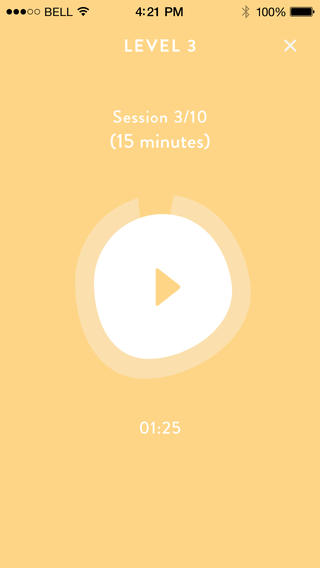
1st screenshot: No headline text on the shot itself: a meditation player showing “Level 3,” “Session 3/10 (15 minutes),” and 01:25 remaining.
The course structure is the pitch — levels and sessions that lengthen as you progress, sold without a single marketing word.

Subtitle: none shown — the 2017 page had no subtitle field
Description opened: “Meditation made simple. Guided meditations suitable for all levels from Headspace. Meditation can help improve your focus, exercise mindful awareness, relieve anxiety and reduce stress.”
Bare brand. The generic words are gone from the title, three years in, with 13,012 ratings behind the name. The description still carries the search words — focus, anxiety, stress — but the title bets the brand alone. Confidence, or a listing resting on word of mouth while the screenshots do the selling.
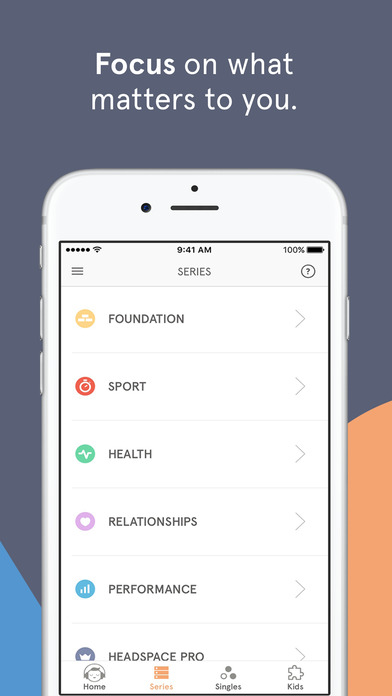
1st screenshot: “Focus on what matters to you.” above a phone showing themed series: Foundation, Sport, Health, Relationships, Performance.
Meditation by life area, not by technique: the shots sell relevance to your day, matching a bare-brand title that says nothing itself.
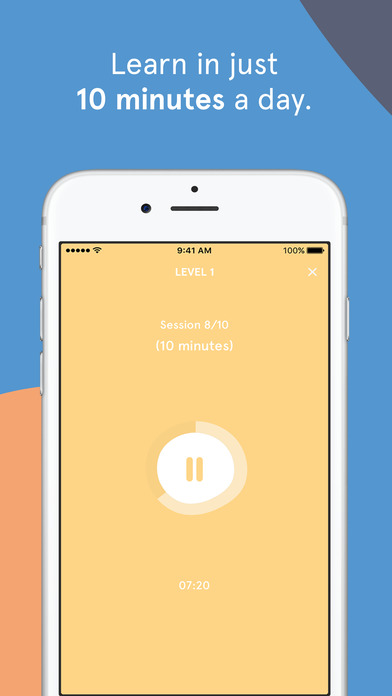
2nd screenshot: “Learn in just 10 minutes a day.” above a meditation player showing Level 1, Session 8/10 (10 minutes).
The 10-minute promise is the conversion line — a small daily commitment, pictured mid-session.
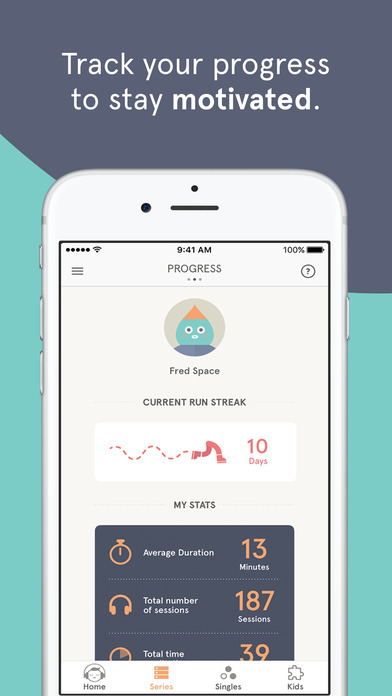
3rd screenshot: “Track your progress to stay motivated.” above a progress screen showing a 10-day streak and 187 sessions.
Streaks and stats close the set: retention mechanics as the reason to start.

Subtitle: “Relax, sleep & manage stress”
Description opened: “Headspace is your guide to health and happiness. It’s the simple way to let go of stress and get a better night’s rest. Learn to relax with guided meditations and mindfulness techniques that bring calm, wellness and balance to your life in just a few minutes a day.”
The generic words return, and sleep joins the title — meditation first, sleep second. The subtitle names three intents in one breath: relax, sleep, stress. The listing stops being a brand statement and becomes a menu: two nouns in the title, three needs in the subtitle.
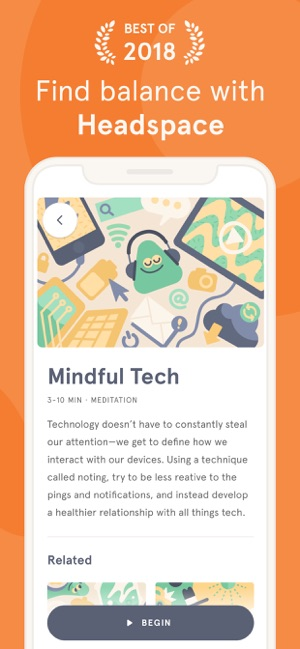
1st screenshot: “Best of 2018 — Find balance with Headspace” above a “Mindful Tech” course on a healthier relationship with technology.
An App Store award leads, and the first course tackles the devices themselves — the app pitching calm from the thing that distracts us.
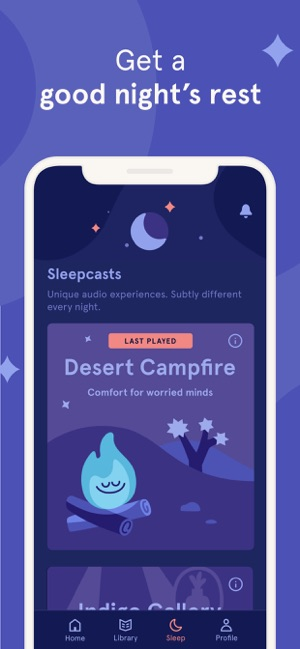
2nd screenshot: “Get a good night’s rest” above a Sleepcasts screen showing “Desert Campfire — Comfort for worried minds.”
Sleep gets its own shot the same year it enters the title: bedtime audio as a second product, not a feature.
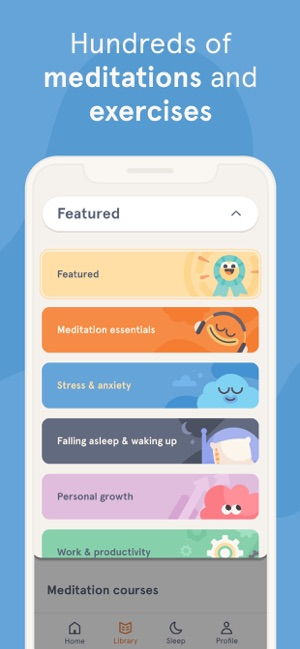
3rd screenshot: “Hundreds of meditations and exercises” above library categories: Stress & anxiety, Falling asleep & waking up, Work & productivity.
Breadth by need — stress, sleep, work, growth — the library as the argument for subscribing.

Subtitle: “Focus, Relax and Stress Relief”
Description opened: “Stress less, sleep soundly, and get happier. Headspace is everyday mindfulness and meditation, so you can make mindfulness a daily habit and be kind to your mind.”
Sleep moves ahead of meditation. Word order in a title is a priority statement, and by 2023 the bigger draw leads. The subtitle drops “sleep” — it lives in the title now — and adds focus and stress relief. The listing re-sorts itself around the need that grew fastest, and spends the freed subtitle space on the next two.
1st screenshot: “Meditation made simple” under the Headspace logo, with no app UI on the shot.
The original promise returns as pure brand: simplicity, eleven years on, with nothing left to prove about the product.
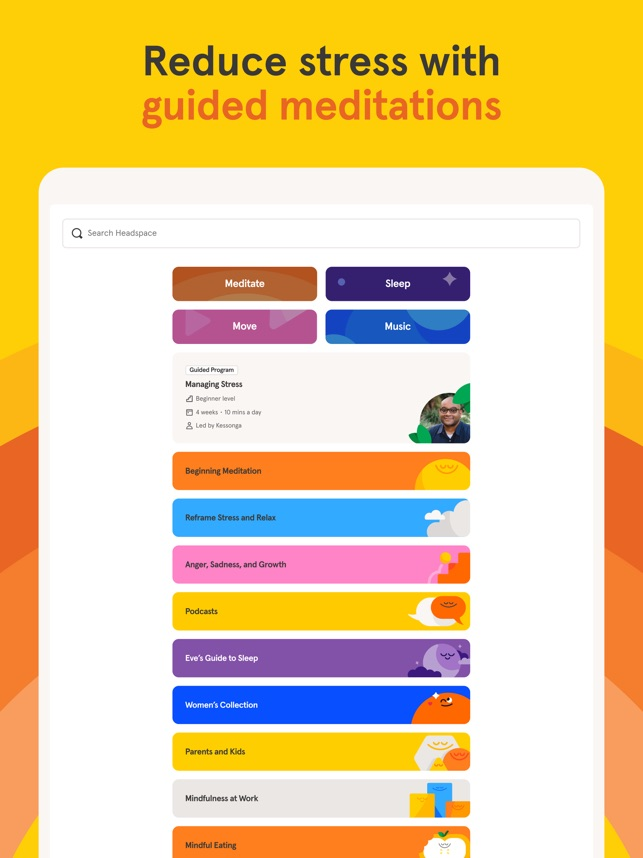
2nd screenshot: “Reduce stress with guided meditations” above the home screen and a “Managing Stress” guided program.
Stress leads the home screen and the headline alike — the subtitle’s last word, pictured.
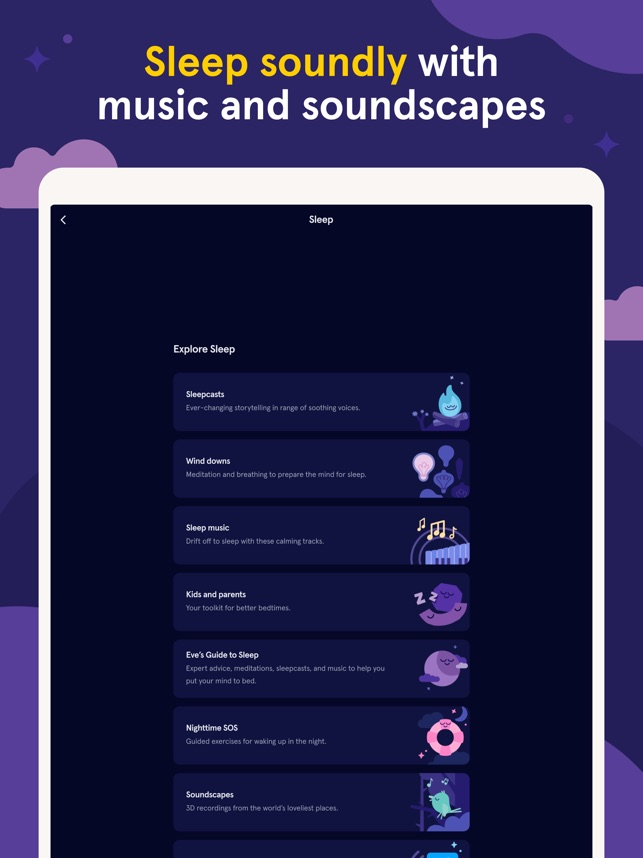
3rd screenshot: “Sleep soundly with music and soundscapes” above the Sleep section: Sleepcasts, Wind downs, Sleep music, Nighttime SOS.
Sleep is a whole department now — sleepcasts, wind-downs, SOS — matching the title that put sleep first.
Subtitle: “Mental Health and Mindfulness”
Description opened: “Welcome to Headspace, your lifelong guide to mental health, mindfulness, and meditation. Stress less, sleep soundly, and feel happier with expert guided meditations, one-on-one mental health coaching, and mood-boosting mindfulness exercises.”
The title holds still; the subtitle goes broad. “Mental Health and Mindfulness” replaces the three specific needs, as the description adds one-on-one coaching and the product grows past courses into care. When the business becomes mental health itself, the subtitle stops listing symptoms and names the category.
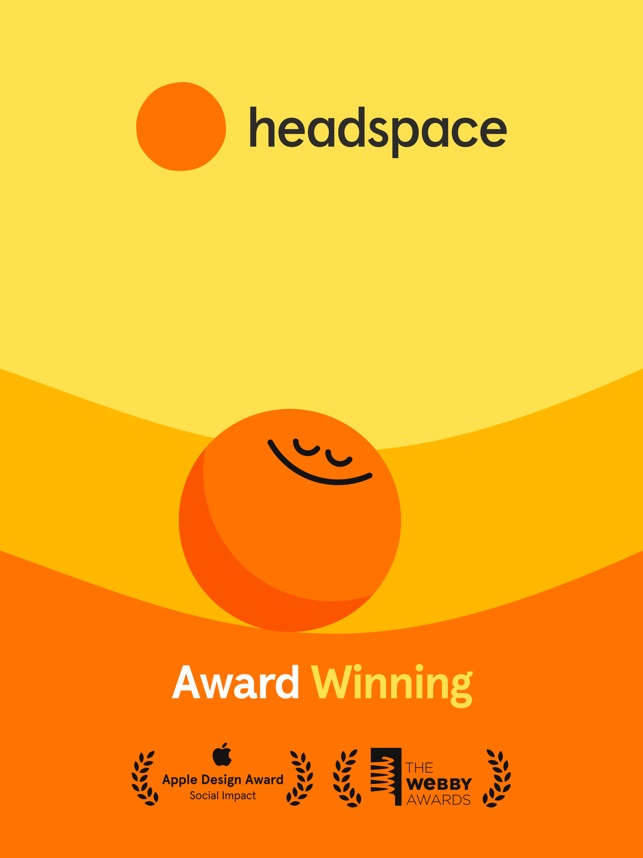
1st screenshot: “Award Winning” above Apple Design Award and Webby Awards laurels, with no app UI on the shot.
Credibility replaces product shots: awards do the persuading for a listing whose audience already knows the app.
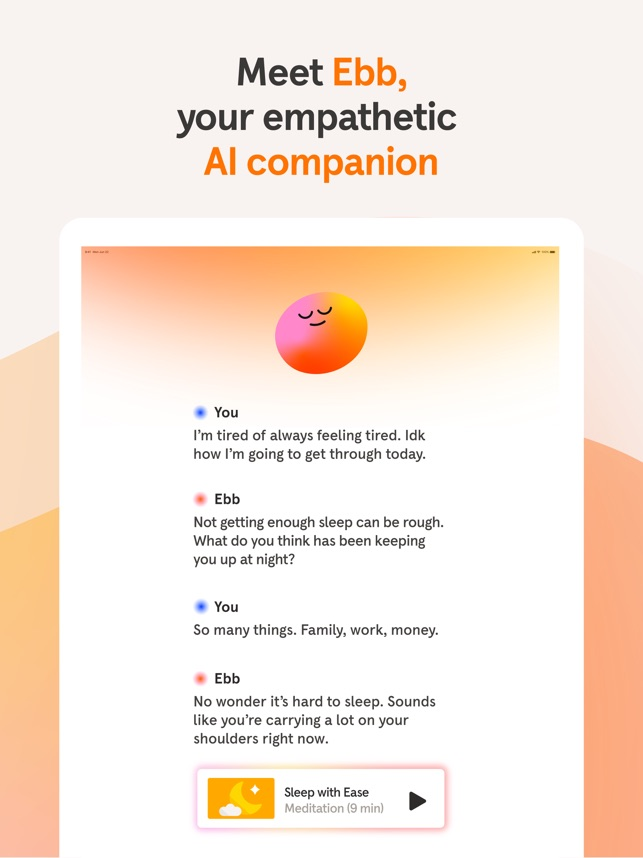
2nd screenshot: “Meet Ebb, your empathetic AI companion” above a chat about feeling tired, recommending “Sleep with Ease — Meditation (9 min).”
The newest reason to install is a conversation, not a course — AI support, with sleep still the example need.
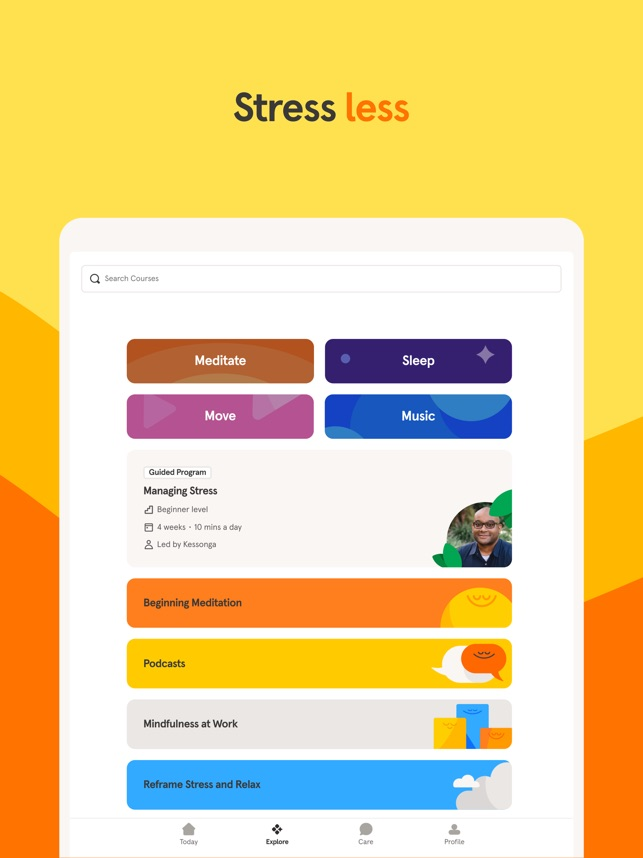
3rd screenshot: “Stress less” above the home screen and a “Managing Stress” guided program.
The home screen is unchanged from 2023, but the headline is now the outcome alone: less stress, full stop.
And the ranks for the phrases this listing has spent a decade rotating through its title and subtitle — measured, not remembered:
| meditation | #2 |
| sleep | #9 |
| mindfulness | #3 |
| mental health | #4 |
| anxiety | #3 |
| stress | #5 |
Every measured phrase sits in the top 10 — but the title’s first word is the weakest of them. “Sleep” at #9 faces sleep trackers, not meditation apps: the word Headspace leads with is the hardest fight it picks.
Ratings compounded while the words moved
While the words kept changing, one number only moved in one direction. These are the ratings totals printed on the archived pages above — the count Apple shows on the storefront, and the single biggest reason a mature app is so hard to displace in search.
The screenshots sold each new reason to install
In 2014 the screenshots sold a course: levels, sessions, a player counting down. By 2017 they sold a habit — ten minutes a day, a streak to keep — and by 2019 they sold a library, with sleep given its own shot the year sleep entered the title. The 2023 set split the pitch cleanly in two: stress on one shot, sleep on the next, with the original promise, “meditation made simple,” as the brand frame. By 2025 the product shots had given way to proof and a new front door: an award laurel, an AI companion named Ebb, and the same home screen under a shorter headline. Each era’s screenshots announced the newest reason to install before the title caught up — and the title, each time, followed where the screenshots had already gone.
Two quieter moves sit underneath. The description travelled from technique to care: “proven meditation and mindfulness techniques” in 2014, “meditation can help improve your focus” in 2017, then “one-on-one mental health coaching” and licensed therapists by 2025. And the category rank on the page slid the whole way — #17 in 2019, #39 in 2023, #68 in 2025 — while the ratings count nearly doubled. Category position on the page is not the prize; the keyword positions today are, and on those the listing holds the top 10 across the board.
What an indie can learn from this
- Court search before the brand exists, then let the brand earn its turn. The 2014 title spent every character on “meditation” and “mindfulness.” By 2017 the bare brand sufficed — but only after 13,012 ratings made the name mean something.
- Put the growth word first. Sleep moved ahead of meditation in 2023 because sleep had become the bigger draw. Word order in a title is a priority statement: lead with the need that is actually growing.
- Let the subtitle follow the business model. “Relax, sleep & manage stress” became “Mental Health and Mindfulness” as coaching, therapy, and an AI companion joined the product. When the business changes, the subtitle should say so in the same breath.
- Screenshots sell the outcome the title can’t fit. Ten minutes a day, a good night’s rest, an AI companion to talk to — each era’s shots pitched the newest reason to install in one line. The title names the category; the screenshots close the sale.
- Ratings are the moat that lets the words move. The title changed four times while the count grew 369 → 967,875. A listing with a million ratings can reposition without losing its place; a new app repositioning that often would start over every time.
More Time Machine case studies
 TikTok: from musical.ly to “Videos, Shop & LIVE”
A merger bridge, a bare brand, then a shop in the title — while ratings grew 10,939 → 18.4 million.
 BeReal: nine ratings to number one — then the long settle
Three and a half years of brand-plus-negation — then the August 2024 rename that finally courted search.
 MileIQ: eight years, one title
The same title and subtitle from 2018 to 2026 — while the seller changed twice and ratings grew 14,422 → 115,037.

Good ideas get better together.
Enjoying the read? Meet indie app builders, compare notes, and share what you’re working on.