GasBuddy: the keyword was the name all along
An app’s title and subtitle are the most honest strategy document it ever publishes: 50-odd characters that say exactly which searches it wants to win. GasBuddy launched on the App Store on 17 December 2010. We pulled its archived App Store pages from March 2011 to October 2026 and read that document at six points in its life. The title went from a full keyword sentence, to a bare brand, to two verbs — find and pay — while the subtitle rotated through every job the app added, and the ratings count grew from 458 to nearly 450,000. Today it holds #1 for every gas-intent phrase its listing ever courted.
Method, and what this article cannot tell you. Historical keyword ranks aren’t public data — Apple never published them — so this article claims none. Each card quotes the captured App Store page and links its snapshot; titles/subtitles exact, ratings as displayed. GasBuddy’s store record dates to 2010; captures begin March 2011. A snapshot shows that date’s listing, not when it changed. The 2011 page split ratings by version; the all-versions figure is cited. The March 2011 icon and screenshots could not be retrieved — no archived copies of that artwork survive — so that card carries none. The December 2020 and March 2022 screenshot sets are byte-identical, so their captions repeat. Some icons and screenshots are served from Apple’s immutable CDN copies of the exact URLs the archived pages referenced. Each screenshot carries its own one-line caption. Strategy readings are interpretation. Ranks were measured live on Apple’s search API, US storefront, 28 October 2026: position among up to 200 results, “—” absent, ranks fluctuate.
From a keyword sentence to two verbs: find and pay
Selected listing snapshots · Follow the changes over time.
Subtitle: none shown — the 2011 page had no subtitle field
Description opened: GasBuddy is a community of users working together to update gas prices – help everyone save on gas!
The title is the whole pitch: brand plus the exact phrase a driver would type. No subtitle field existed yet, so every character goes to the search. A listing written for strangers: the name does the finding, the community does the keeping.

Subtitle: “For the perfect pit stop”
Description opened: Save money, save time and never pay full price for gas again with a community of 70 million users. GasBuddy helps you save $340 a year by telling you exactly where and when to buy gas, and more!
Seven years in, the keyword sentence is gone: a bare brand, with the search job handed to the subtitle. “Pit stop” is a driver’s phrase, not a category label — the listing now sounds like the road. The community number does the persuading the title stopped doing: 70 million users, $340 a year.
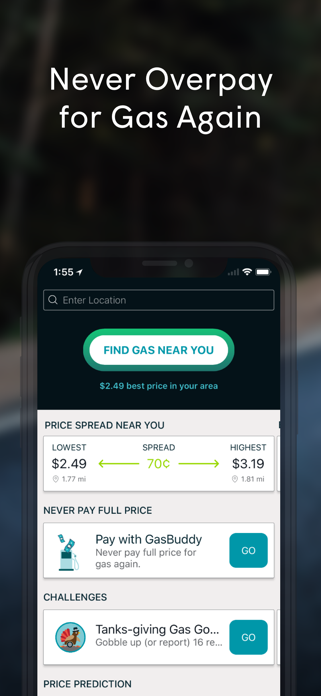
1st screenshot: “Never Overpay for Gas Again” above a phone showing FIND GAS NEAR YOU, a $2.49 best price, and a 70¢ spread between the lowest and highest nearby prices.
The promise is the price spread itself — never overpay, pictured as the gap between $2.49 and $3.19.
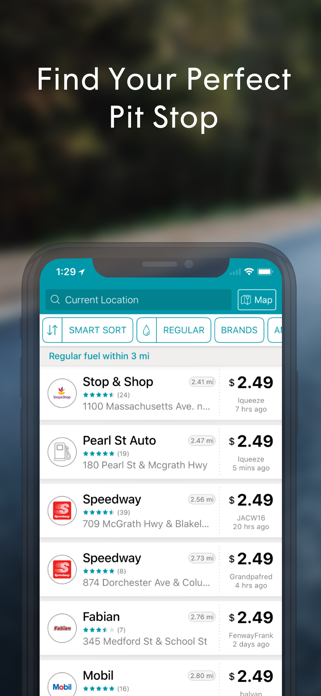
2nd screenshot: Find Your Perfect Pit Stop — the subtitle, word for word — above a station list priced to the cent and sorted by distance.
The subtitle becomes the screenshot headline: the listing’s keyword phrase, demonstrated as a list.
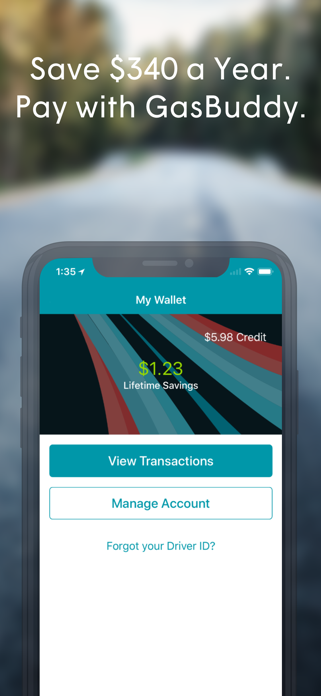
3rd screenshot: Save $340 a Year. Pay with GasBuddy. above a wallet screen showing $1.23 in lifetime savings and a $5.98 credit.
The year’s savings claim gets a wallet to land in — the payment product, not the price list, is the third shot.

Subtitle: “Save money on gas”
Description opened: GasBuddy is the only app helping drivers Fuel Better.
The subtitle drops the poetry for the plain verb phrase: save money on gas. “Fuel Better” enters the description as the brand line, a year before it reaches the screenshots. The subtitle says what the app does; the description starts saying what the app is for.
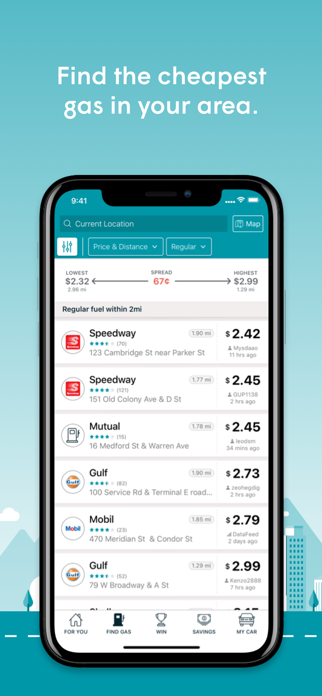
1st screenshot: Find the cheapest gas in your area. above a station list with a 67¢ spread, lowest $2.32, highest $2.99.
The cheapest-gas promise, reprised with the spread as the proof — the same argument as 2018, one line shorter.
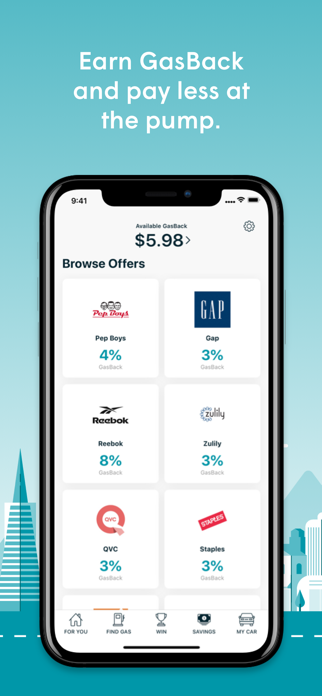
2nd screenshot: Earn GasBack and pay less at the pump. above store offers: 4% at Pep Boys, 8% at Reebok, 3% at Gap.
Savings leave the pump entirely — cash back at ordinary stores, sold as a second reason to keep the app.
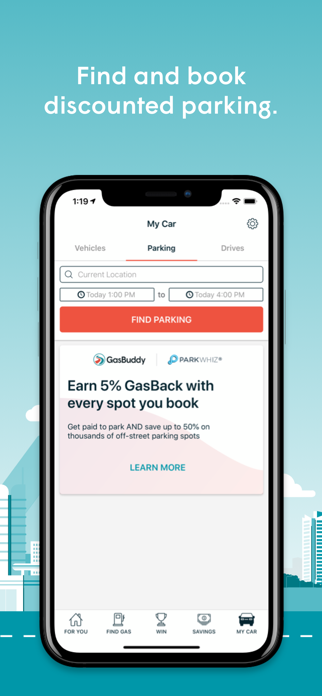
3rd screenshot: Find and book discounted parking. above a parking search promising 5% GasBack with every spot you book.
Parking enters the listing as a GasBack earner — every new business line arrives attached to the rewards currency.

Subtitle: “Get the best gas prices nearby”
Description opened: Stop paying full price at the pump! You could be saving up to 25¢/gal. Join the 90 million people already saving.
The title grows a second verb: pay. The payment card is now half the product, so the title says so, and the subtitle narrows to the original job — best prices, nearby. Two verbs, two businesses: find the price, then take the payment.
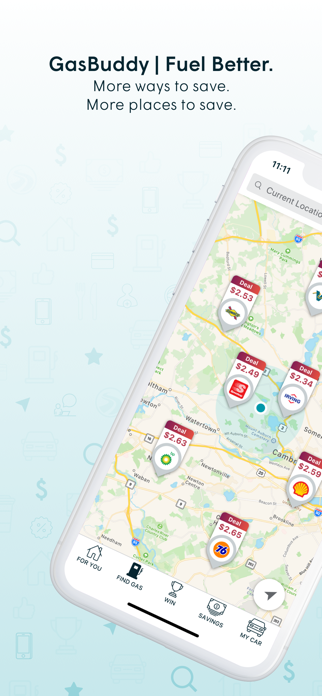
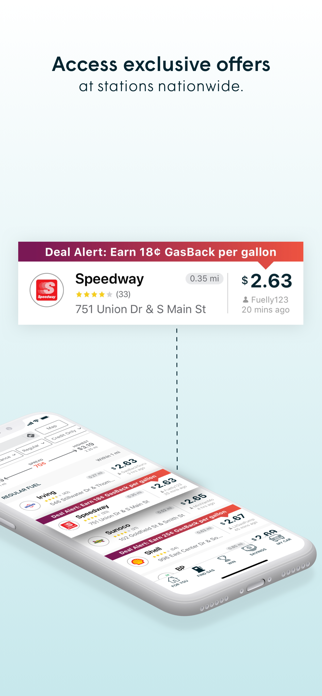
1st screenshot: GasBuddy | Fuel Better. More ways to save. More places to save. above a map studded with deal pins from $2.34 to $2.65.
“Fuel Better” arrives as the brand line, and the map — not the list — carries the cheapest-gas proof.
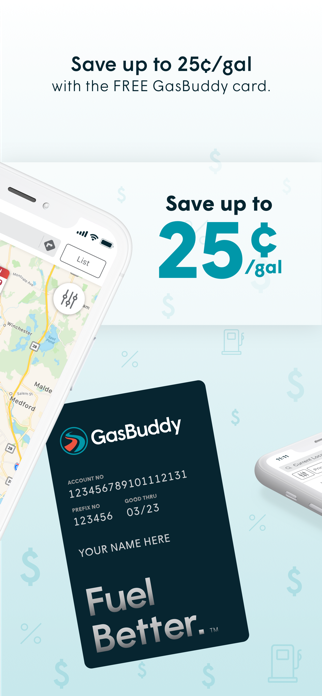
2nd screenshot: Save up to 25¢/gal with the FREE GasBuddy card. above a dark payment card reading Fuel Better.
The card is the conversion: a free payment product whose headline is a per-gallon number, not a feature list.
3rd screenshot: Access exclusive offers at stations nationwide. above a Deal Alert: Earn 18¢ GasBack per gallon card for a Speedway at $2.63.
Deal alerts turn the list into push notifications — savings that find the driver instead of waiting to be searched.

Subtitle: “Cheap fuel prices and rewards”
Description opened: Join the 90 million people already saving! Get the free GasBuddy card and never pay full price at the pump again.
The title holds; the subtitle swaps the local promise for the loyalty one — cheap fuel prices and rewards. The screenshots, byte for byte, are the December 2020 set: the words moved, the pictures didn’t. When the subtitle carries the new strategy, the screenshots are allowed to stand still.
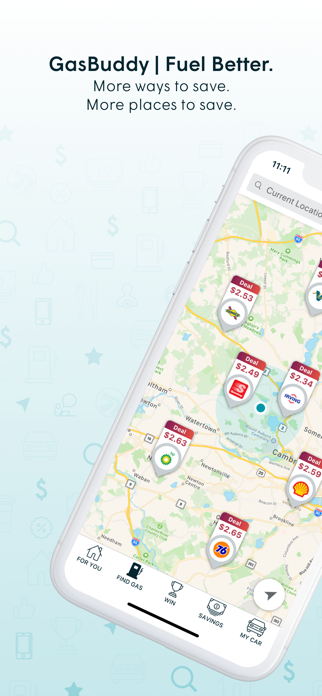
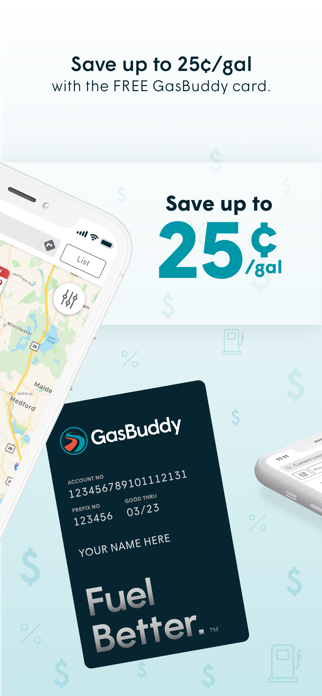
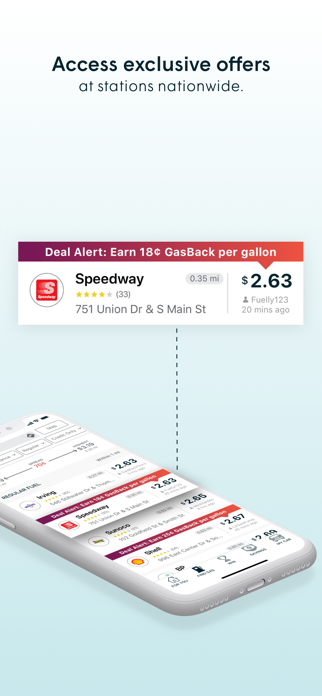
1st screenshot: Same image as December 2020 — GasBuddy | Fuel Better above the deal-pin map.
Unchanged for fifteen months: the map still carries the cheapest-gas proof while the subtitle moves on to rewards.
2nd screenshot: Same image as December 2020 — Save up to 25¢/gal above the GasBuddy card.
The card pitch holds still too — the payment product needed no new headline in over a year.
3rd screenshot: Same image as December 2020 — the 18¢ GasBack deal alert at Speedway.
The third shot repeats as well: the listing froze its visuals while the words around them kept moving.

Subtitle: “Cheap fuel prices and rewards”
Description opened: Wherever you go, GasBuddy® helps you fuel up for less while rewarding you with savings that go beyond the pump.
Six years after the keyword sentence, the title is unchanged since 2020 and the subtitle since 2022 — the longest stillness in the listing’s life. The description now leads with longevity: 100 million downloads, 25 years. The age rating dropped from 17+ to 13+ along the way. A listing that stopped auditioning: the name, the verbs, and the proof all stay put.

1st screenshot: SAVING IS A DESTINATION. WHERE WILL YOU GO TODAY? over a photo of a smiling driver leaning from a car window — no app UI on the shot.
The first shot stops showing the product at all: saving as a feeling, fifteen years in, for an audience that already knows the app.
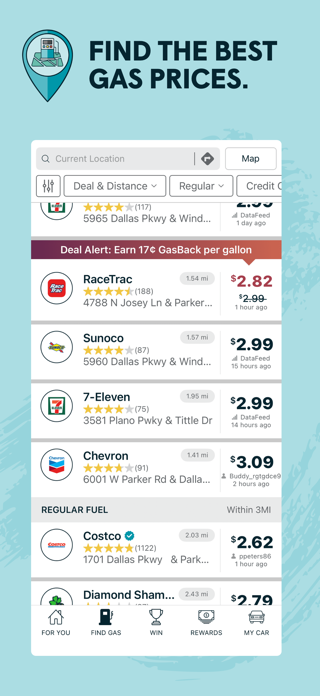
2nd screenshot: FIND THE BEST GAS PRICES. above a station list led by a RaceTrac deal alert: 17¢ GasBack, your price $2.82 against $2.99.
The list returns on shot two, and the deal alert is now the lead item — the price shown is the price after GasBack, not the pump price.
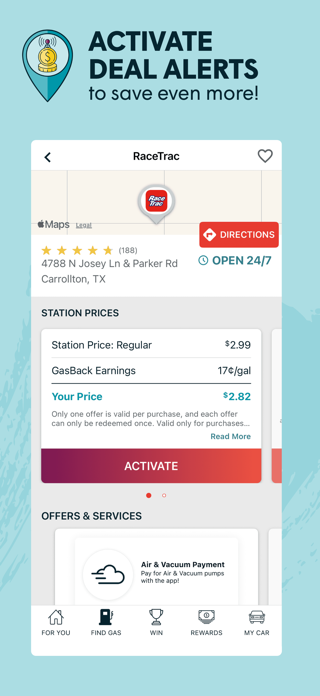
3rd screenshot: ACTIVATE DEAL ALERTS to save even more! above a station page: $2.99 pump price, 17¢ GasBack, Your Price $2.82, and an ACTIVATE button.
The closest thing to a call to action in the set — activate the alert, and the discount applies itself.

And the ranks for the phrases this listing has spent fifteen years rotating through its title and subtitle — measured, not remembered:
| gas | #1 |
| gas prices | #1 |
| cheap gas | #1 |
| find gas | #1 |
| gas station | #1 |
| save on gas | #2 |
Five #1s and a #2 — the listing owns the gas-intent cluster outright. The one phrase it doesn’t top is the subtitle’s own 2019 wording, “save on gas,” at #2. The name was the keyword all along: GasBuddy ranks first for “gas” itself, the word every competitor has to buy around.
Ratings compounded while the title settled
While the words kept changing, one number only moved in one direction. These are the ratings totals printed on the archived pages above — the count Apple shows on the storefront, and the single biggest reason a mature app is so hard to displace in search.
The screenshots sold the next business before the title did
In 2018 the screenshots sold the spread: never overpay, the perfect pit stop, $340 a year in a wallet. By 2019 they sold breadth — the cheapest gas, GasBack at ordinary stores, discounted parking — each new business line arriving attached to the rewards currency. The December 2020 set froze the frame: a deal-pin map, the free payment card, a deal alert at Speedway — and the March 2022 page reused those three shots byte for byte while the subtitle moved on to rewards. By October 2026 the first shot had stopped showing the product entirely — a driver, a road, saving as a destination — and the list returned on shots two and three with the deal alert as the lead item and the price after GasBack as the price shown.
Two quieter moves sit underneath. The description travelled from community to currency: “a community of users working together to update gas prices” in 2011, “Fuel Better” in 2019, “savings that go beyond the pump” and 25 years in 2026. And the icon settled the same way the title did — the uncircled road swoosh of 2018 gave way to the circled mark in 2019, unchanged through today. Fifteen years of listing changes, and the through-line is restraint: one name, two verbs, and a count that did the talking.
What an indie can learn from this
- A name that is the search term is a moat — if the product keeps the promise. “GasBuddy” holds #1 for “gas” itself, but the 2011 listing earned it the slow way: a community updating prices together. The name opens the door; the reports keep it open.
- Let the subtitle do the next job, not the same one. Pit stop, save money, best prices nearby, cheap fuel and rewards — each subtitle named the newest reason to install while the title held still. When the title finally grew, it grew by a verb, not an adjective.
- Screenshots sell the business model, not the feature. A price spread, a wallet, a payment card, a deal alert: each era’s shots pitched the way GasBuddy makes money now, not the map underneath it.
- Don’t redesign what works. The December 2020 screenshot set ran unchanged into March 2022, and the circled icon has held since 2019. A listing with 400,000 ratings can afford stillness; churn would cost more than it buys.
- Ratings are the permission to go broad. The description went from “a community of users” to “100 million downloads and 25 years” as the count grew 458 → 446,833. Scale lets a listing claim the category instead of courting the keyword.
More Time Machine case studies
 Headspace: sleep took the first word, then the whole mind followed
From a web address for a title to “Sleep & Meditation” — while ratings grew 369 → 967,875.
 TikTok: from musical.ly to “Videos, Shop & LIVE”
A merger bridge, a bare brand, then a shop in the title — while ratings grew 10,939 → 18.4 million.
 BeReal: nine ratings to number one — then the long settle
Three and a half years of brand-plus-negation — then the August 2024 rename that finally courted search.

Good ideas get better together.
Enjoying the read? Meet indie app builders, compare notes, and share what you’re working on.